


Why Branded YouTube Content Fails: Solving the Strategy Gap

Picture of Sinuhé González
Sinuhé González

Data Strategy and YouTube Audience Insights, Touchstorm & Touchstorm DATAlabs

Why Your Branded YouTube Content Isnt converting

Most brands fail on YouTube because of a fundamental strategy gap: they produce videos based on what the brand wants to say rather than what viewers are actively searching to learn.

When brands struggle on YouTube, it usually comes down to two major mistakes:

1. The Repository Trap: Treating YouTube as a dump site for existing campaign assets, webinars, and commercials without an intentional channel organization. (We’ll cover how to fix your channel architecture in a separate post.)

2. The Audience-Demand Gap: Producing content around internal brand messaging instead of real, search-responsive viewer intent.

Fixing this second mistake requires a fundamental shift: moving from brainstorm-first planning to data-driven topic selection.

YouTube content strategy focused on audience demand rather than internal publishing priorities

Why are most brands making the wrong content for YouTube?

Winning starts before the camera ever turns on. A beautifully produced video cannot compensate for a topic with weak demand, poor platform fit, or overwhelming competition. Instead of asking, “What content do we already have to publish?” brands must ask, “What does our audience really want to know, and where can our brand credibly provide the best answer?”

Touchstorm DATALabs YouTube dataset connecting topics, channels, videos and search demand

To answer that question, Touchstorm DATAlabs built a classified dataset covering an estimated 96% of YouTube’s database. We organized channels, videos, users, and search terms into a taxonomy of over 200,000 topics. By pairing this taxonomy with billions of search volume signals, our system lets brands evaluate content ideas against real audience demand, actual platform behavior, and competitive saturation.

How do you find high-demand YouTube content topics?

Topic Finder is our proprietary prioritization model that evaluates content ideas through three signals:

Search Volume: How much active demand exists across search engines.

YouTube View Volume: How much of that interest is already turning into viewing behavior on YouTube.

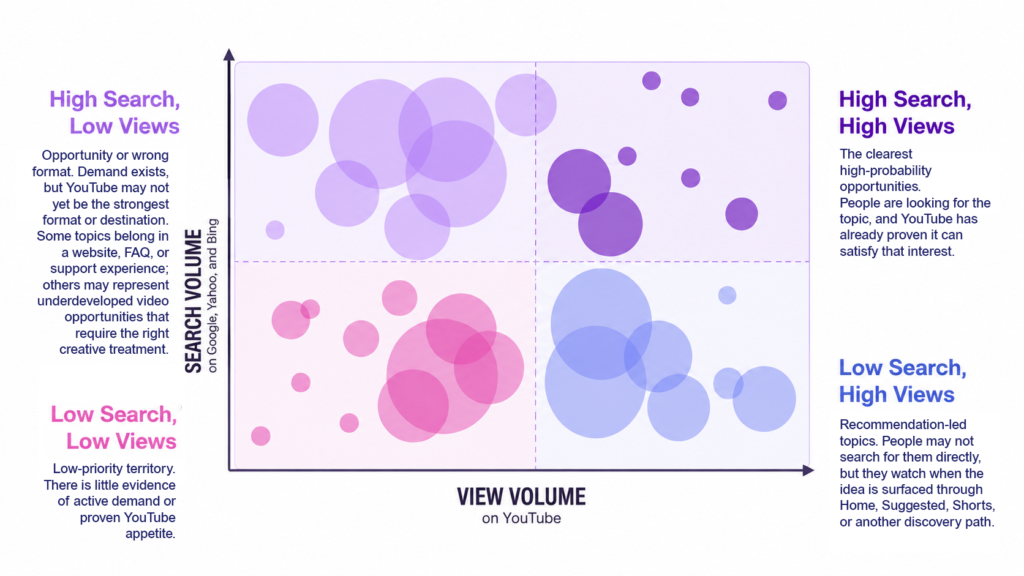
Video Count: How much content already exists in the topic, represented by the size of the bubble. Larger bubbles suggest a more saturated field.

The point is not to chase the largest number. It is to find the strongest combination of demand, YouTube fit, and winnable competition.

Topic Finder in Action: Makeup Subtopics.

We drilled down into every subtopic within the category to map search demand against YouTube views, using bubble size to represent existing competition.
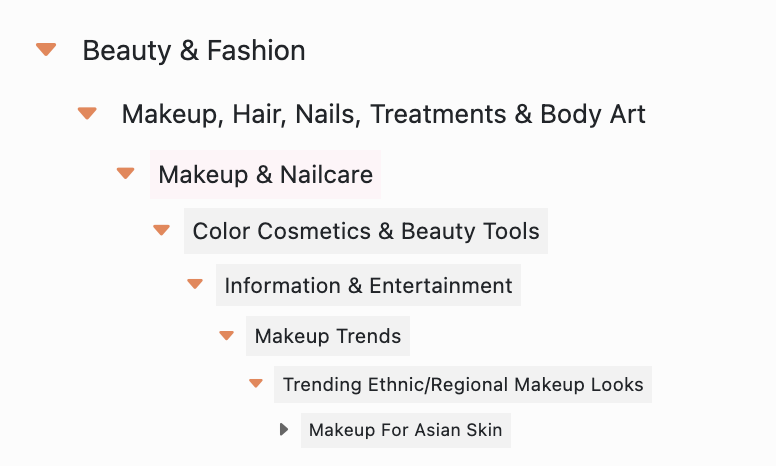
Touchstorm DataLabs Taxanomy example - Makeup Trends

Rather than treating a broad category as a single idea, Topic Finder surfaces the hidden sub-opportunities beneath it: 

  High Demand / High Views: Subtopics like Makeup for Asian Skin show strong search volume and high viewing behavior, confirming proven audience traction.

  High Demand / Low Views: Highlights underserved subtopics where viewers are searching for answers, but quality content is lacking.

  Low Demand / High Views: Signals niche topics with passionate, highly engaged audiences despite lower overall search volume. 

The result is a clear picture of distinct opportunities, ensuring every content decision rests on data rather than guesswork.
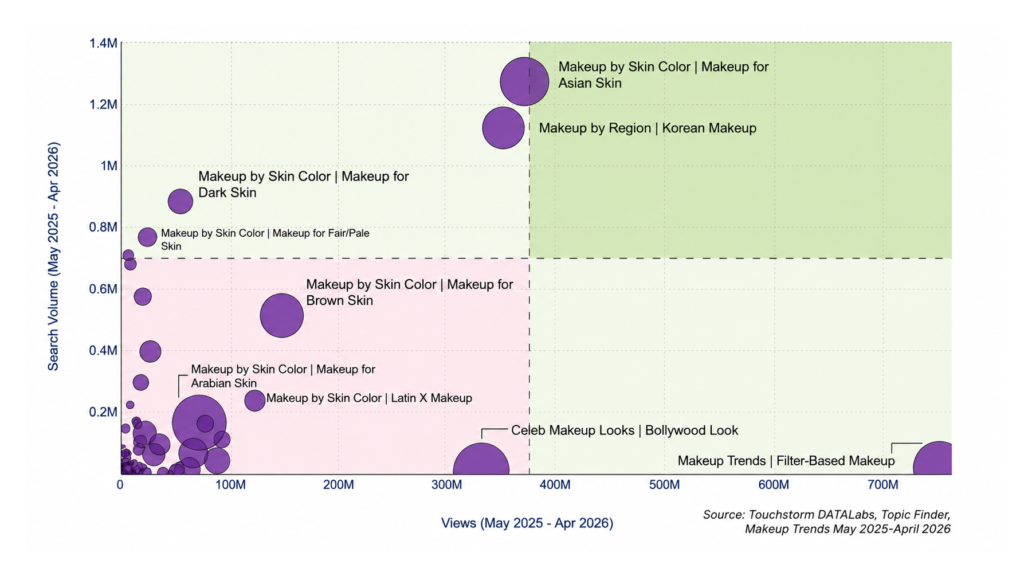

Touchstorm Topic Finder bubble chart comparing YouTube views and search volume for makeup topics, highlighting high-demand opportunities

How do you catch a trend before it becomes obvious?
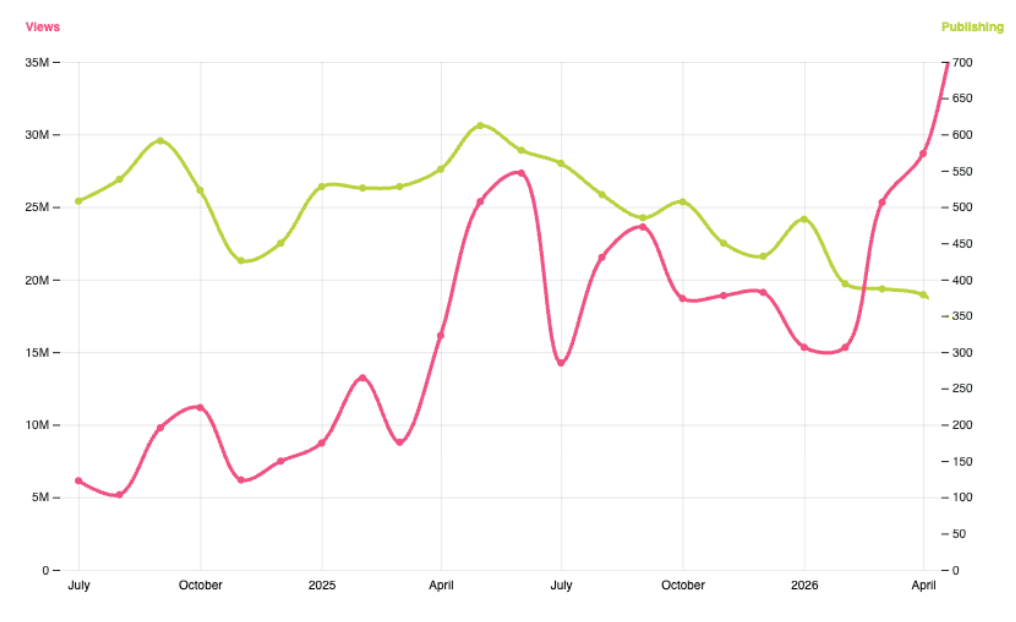
Search volume tells you what viewers already know to ask for. However, static search data can miss emerging conversations and fast-moving behaviors that build momentum before viewer vocabulary catches up. To spot those shifts early, Trend Explorer tracks search volume and viewing behavior for every subtopic bubble on your Topic Finder chart over time. 

Rather than looking at a static snapshot, tracking these subtopic bubbles month-by-month reveals which trends are getting hotter and which ones are cooling off: 

  • Velocity Signals: Monitors view rates and publishing frequency to catch rising search trends before competitive saturation hits.
  • Market-Specific Opportunities: Segments trend data by country and language to separate a short-term global spike from a durable, market-specific opportunity.
  • Seasonality vs. Growth: Filters out predictable seasonal fluctuations to isolate true long-term audience trajectory. 
How do you catch a trend before it becomes obvious?

How to Access Trend Explorer:

Both Topic Finder and Trend Explorer are proprietary tools available to enterprise marketing teams through a Touchstorm DATAlabs subscription or as part of a fully managed Touchstorm YouTube strategy package.

Make Content for YouTube – Not for Your Brand Asset Library
Once topic opportunities are clear, content must be created specifically for YouTube.

Repurposing existing brand assets – like broadcast commercials, webinars, or campaign trailers – is often seen as a shortcut. However, forcing assets built for other channels onto YouTube simply transfers internal priorities into an environment where they don’t belong. 

Production represents a significant investment. Producing videos around internal messaging or unvetted topics risks spending high production dollars for mere hundreds or thousands of views.

Conversely, aligning your creative execution with proven search demand and viewer intent turns that same production investment into hundreds of thousands of views. 

Respect Platform Behavior: YouTube viewers are searching for specific solutions, entertainment, or answers, not corporate announcements. 

Optimize for Intent: The hook, structure, length, and pacing must match how your target audience consumes content on YouTube.

Knowing what content to create is the first half of the job. The second half is executing and marketing that content so it reaches its intended audience.

What’s Next in Part 2?

Identifying high-demand topics sets your strategic foundation. In Part 2 of this series, we shift from content selection to content packaging and distribution:

  • Packaging Strategy: How to pair titles and thumbnails to earn the initial click.
  • Audience Retention: How to structure the first 30 seconds to keep viewers watching longer.
  • Content Marketing: How to optimize distribution so your videos travel across the algorithm.

 Ready to find your brand’s YouTube opportunities?

Touchstorm DATAlabs helps enterprise brands stop wasting production budget on low-demand topics. Connect with our YouTube Strategy Team to analyze your category’s search demand.